7 minute read
Sonotube Calculator
Sonotube Calculator — clear numbers you can take to the plant or the bag aisle.
Quick answer
Sonotube Calculator: 12 in tube ≈ 0.785 ft³ per foot of height ≈ between one and two 80 lb bags per foot. A 4 ft × 12 in tube is about 3.14 ft³ ≈ 6 bags of 80 lb before waste.
- 8 in → 0.349 ft³/ft
- 10 in → 0.545
- 12 in → 0.785
- 16 in → 1.396
- 18 in → 1.767
- 24 in → 3.142
Sonotube Calculator: What the tube skips
No core to subtract — the tube fills solid. Add bells as a separate footing volume. Use inside diameter. Quantity multiplies identical piers on the sonotube calculator.
Sonotube Calculator: Diameter jumps hurt
Moving from 12 to 18 inches more than doubles concrete per foot. Confirm the plan diameter before you buy tubes and bags together.
Do it in Concrete Calculator
Tap a common size, set height and count, read bags and yards. Fence posts in dug holes (not full tubes) use the post hole calculator.
Bag counts per foot (80 lb)
8 in ≈ 0.6 bags/ft before rounding quirks · 12 in ≈ 1.3 bags/ft · 18 in ≈ 3 bags/ft. Always ceil after multiplying height × count × volume, and apply waste. A grid of ten 12 in × 4 ft tubes is about 31.4 ft³ — 53 bags of 80 lb before waste — suddenly a short-load conversation.
Bells and brackets
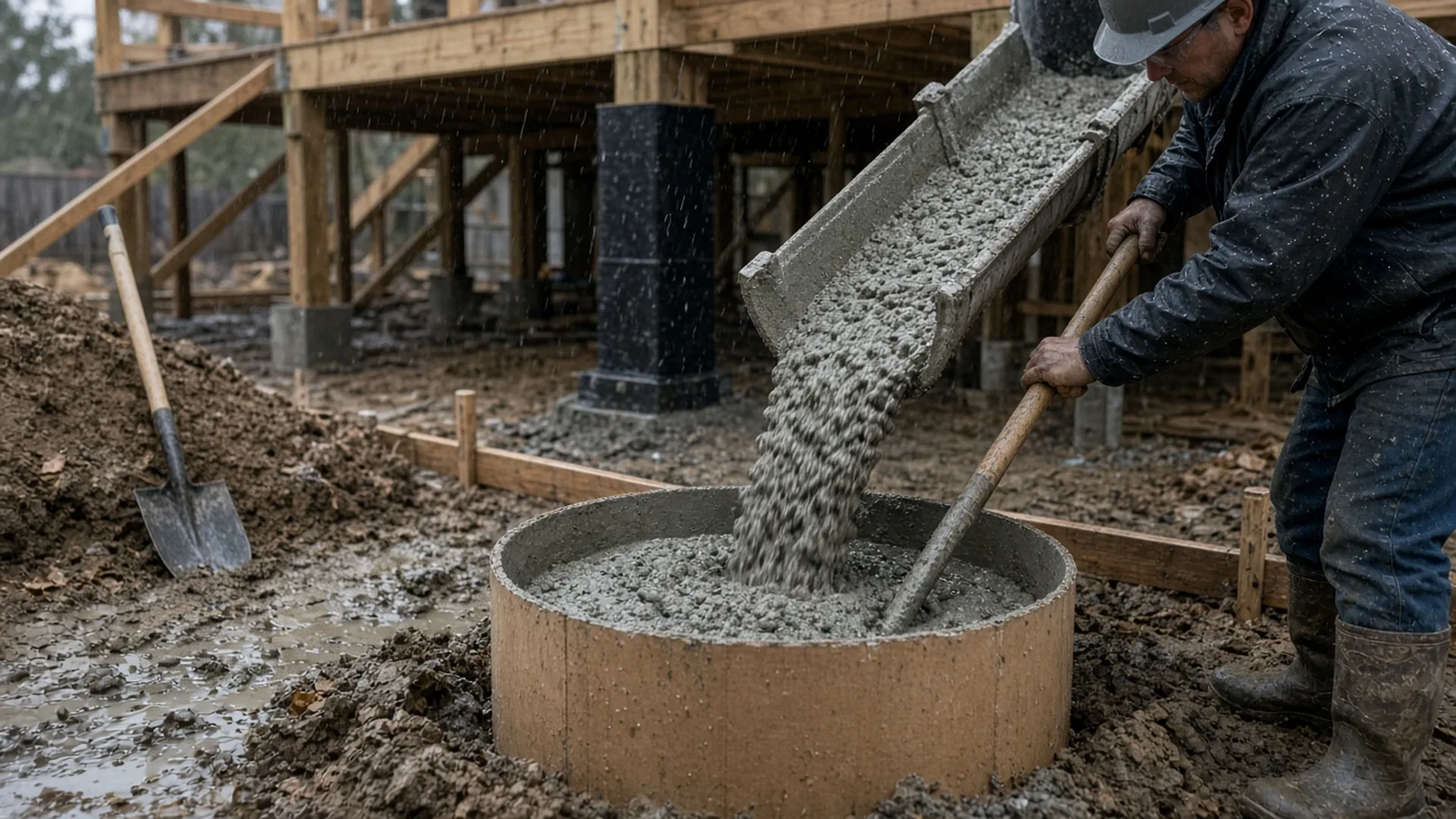
A belled bottom is a footing volume. Steel brackets and post bases sit in or on the concrete but rarely change yards much — do not subtract them like a wood fence post unless the plan says the tube is otherwise occupied.
Field notes to keep handy
Measure to the outside of the forms. Convert every side to the same unit before you multiply. Apply waste after you sum every piece of the job, then round once for the plant.
Bag counts always round up because a partial bag is still a whole bag at the store. Compare that total with a delivered price when short-load fees show up on the quote.
Normal-weight planning density here is 150 pounds per cubic foot unless you switch it. Lightweight mixes and specialty bags can differ — read the ticket or the label when they do.
Frequently asked questions
Bags for 12 in × 4 ft?
About 6 bags of 80 lb.
Yards for 18 in × 10 ft?
About 0.65 yd³ neat.
Subtract the post?
Not for a full sonotube pier.