
9 minute read
How to Calculate Yards of Concrete
How to Calculate Yards of Concrete — clear numbers you can take to the plant or the bag aisle.
Quick answer
How to Calculate Yards of Concrete: convert every side to feet, multiply, divide by 27. 10×10×4 in = 1.23 yd³. Add waste, then round trucks to 0.25 yd.
How to Calculate Yards of Concrete: Convert, then multiply
Inches ÷ 12 = feet. 6 in = 0.5 ft. 16 in = 1.333 ft. Write the converted numbers before you multiply if you are on paper. In Concrete Calculator, set each field’s unit and skip the mental math.
- 10×10×4 in = 1.23 yd³
- 20×24×6 in = 8.89 yd³
- 16×8 in footing = 0.033 yd³ per foot of length
- 12 in sonotube = 0.785 ft³ per foot of height
How to Calculate Yards of Concrete: Coverage when you know area
One yard covers 81 ft² at 4 in, 54 at 6 in. Area ÷ coverage ≈ yards. This is a check, not a replacement for measuring thickness carefully — a driveway that should be 6 inches is not a 4 inch coverage problem.
Add pieces once
Sum neat volumes, add waste once, round once. Do not round every pier to 0.25 yd on its own. Six piers at 0.18 yd each are 1.08 yd neat, not 1.50 yd ordered as six separate quarter-yard tickets.
Footings and cylinders
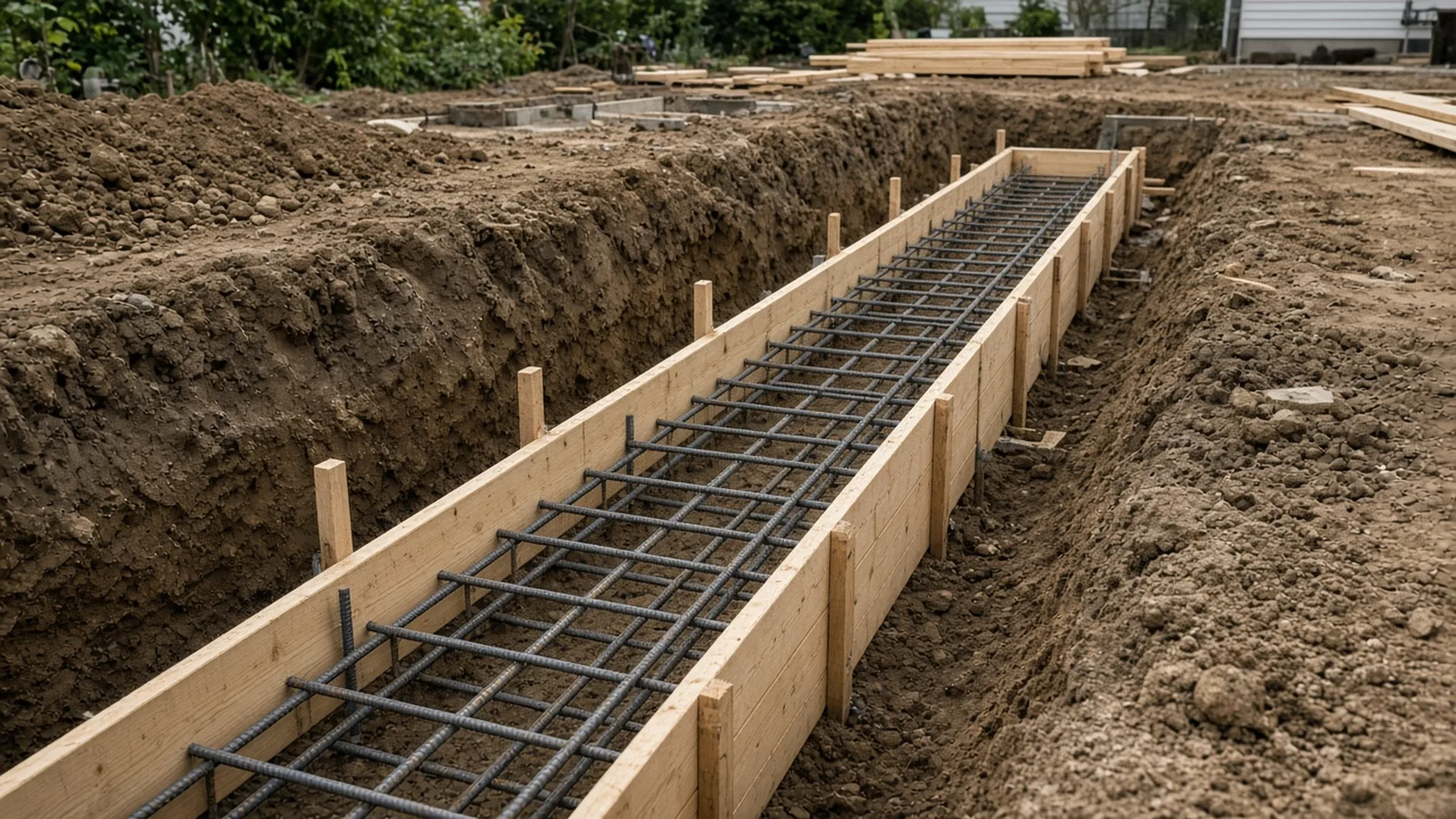
Continuous footings are length × width × depth with width and depth often in inches. Round columns and sonotubes are πr²h. Post holes subtract gravel depth and optionally the post. Use the matching calculator so the formula matches the form.
Do it in Concrete Calculator
Open the yard calculator or any shape page. The exact volume and the plant order print side by side so you can see the rounding.
Paper worksheet you can copy
Write length, width, thickness with units. Convert each to feet. Multiply for ft³. Divide by 27 for yd³. List the next shape on a new line. Sum neat yd³. Multiply by 1.05 or 1.10. Round up to the next 0.25 for the plant. That paper path is identical to Concrete Calculator’s job list.
How to figure concrete yardage for a footing: convert 16 in × 8 in to 1.333 ft × 0.667 ft, multiply by length in feet, divide by 27. Per-foot tables speed house perimeters once the section is fixed.
Common wrong answers
Multiplying feet × feet × inches and calling it cubic feet. Dividing by 27 before converting inches. Rounding every pier to a quarter yard. Using square yards as if they were cubic yards. Each of those produces a confident wrong order.
Field notes to keep handy
Measure to the outside of the forms. Convert every side to the same unit before you multiply. Apply waste after you sum every piece of the job, then round once for the plant.
Bag counts always round up because a partial bag is still a whole bag at the store. Compare that total with a delivered price when short-load fees show up on the quote.
Normal-weight planning density here is 150 pounds per cubic foot unless you switch it. Lightweight mixes and specialty bags can differ — read the ticket or the label when they do.
Frequently asked questions
Formula for yards?
(L×W×T in feet) ÷ 27.
How many ft³ in a yard?
27.
Do I round before waste?
Apply waste to neat volume, then round the truck order.
Metric?
Work in m³, or convert 1 m³ ≈ 1.308 yd³.