
7 minute read
Concrete Formula for Yards
Concrete Formula for Yards — clear numbers you can take to the plant or the bag aisle.
Quick answer
Concrete Formula for Yards: add 5–10% after the neat volume, then round the truck to the next 0.25 yd once. Tight, well-leveled bases can live near 5%. Rough trenches and first-time forming lean toward 10%.
Concrete Formula for Yards: Where volume goes
Forms leak. Bases dip. Chutes hold material. Trenches cave. Pump lines hold a surprising amount on long runs. None of that shows up in a neat L×W×T on graph paper.
Concrete Formula for Yards: Round once
Sum every pour on the job, apply waste, then round. Rounding six footings to 0.25 yd each invents concrete you will not place. Concrete Calculator’s job list exists for this reason.
If you still run short
Stop at a clean edge if you can. Keep a couple of bags for the last low spot on small jobs. On big pours, know the plant’s emergency reload time before the truck leaves.
Do it in Concrete Calculator
Set the waste slider on the yard calculator or homepage tool. Read exact vs ordered yards before you call.
Examples of waste that looks “high” until pour day
A trench that widens 2 inches on each side over a long run adds real yards. A pump with a long hose holds material you will not see in the forms. First-time forming with wavy grades eats the 10% line. Experienced crews on laser-leveled indoor slabs sometimes live closer to 5%.
What to do with leftover
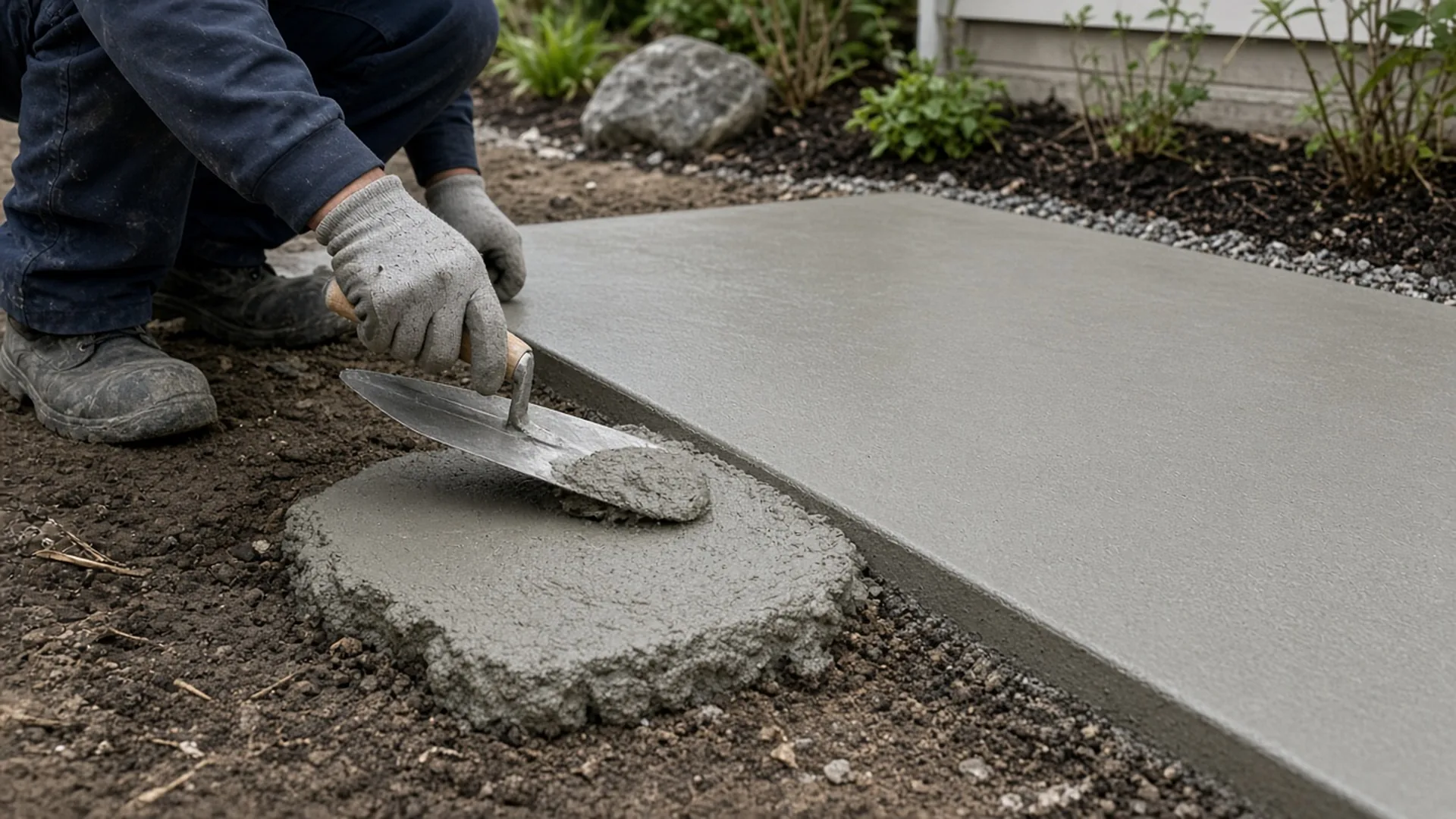
Have a small form ready: a patio step, a post hole, a paver base scrap pad. Dumping leftover on the lawn helps no one. Short concrete is worse than leftover — cold joints and thin corners cost more than a washout form.
Field notes to keep handy
Measure to the outside of the forms. Convert every side to the same unit before you multiply. Apply waste after you sum every piece of the job, then round once for the plant.
Bag counts always round up because a partial bag is still a whole bag at the store. Compare that total with a delivered price when short-load fees show up on the quote.
Normal-weight planning density here is 150 pounds per cubic foot unless you switch it. Lightweight mixes and specialty bags can differ — read the ticket or the label when they do.
Frequently asked questions
Is 10% always right?
Default yes for rough work; 5% can work on tight bases.
Do bags need waste too?
Yes — apply waste before rounding bags up.
What about pump lines?
Long pump runs may need more than 10% — ask the operator.