8 minute read
Ready Mix Calculator
Ready Mix Calculator — clear numbers you can take to the plant or the bag aisle.
Quick answer
Ready Mix Calculator: 1 yd³ = 45 bags of 80 lb. Past ~1–2 yd³, trucks usually win on labor unless access is impossible. Under ~0.75 yd³, bags usually win — especially if a short-load fee applies.
Ready Mix Calculator: What changes at one yard
Bags for small, stop-start work: fence posts, a mailbox pier, a tiny pad. Ready-mix for volume, consistency, and speed. Mixing 90 bags is a different job than placing one truck.
Ready Mix Calculator: Put both prices on one pour
Enter $/yd and $/bag in Concrete Calculator. Add delivery, short-load, and pump from the quote. A “cheap” yard that carries a $150 short-load fee can lose to bags on a 1.25 yd patio. A driveway at 15 yd never belongs on bags.
Access and timing
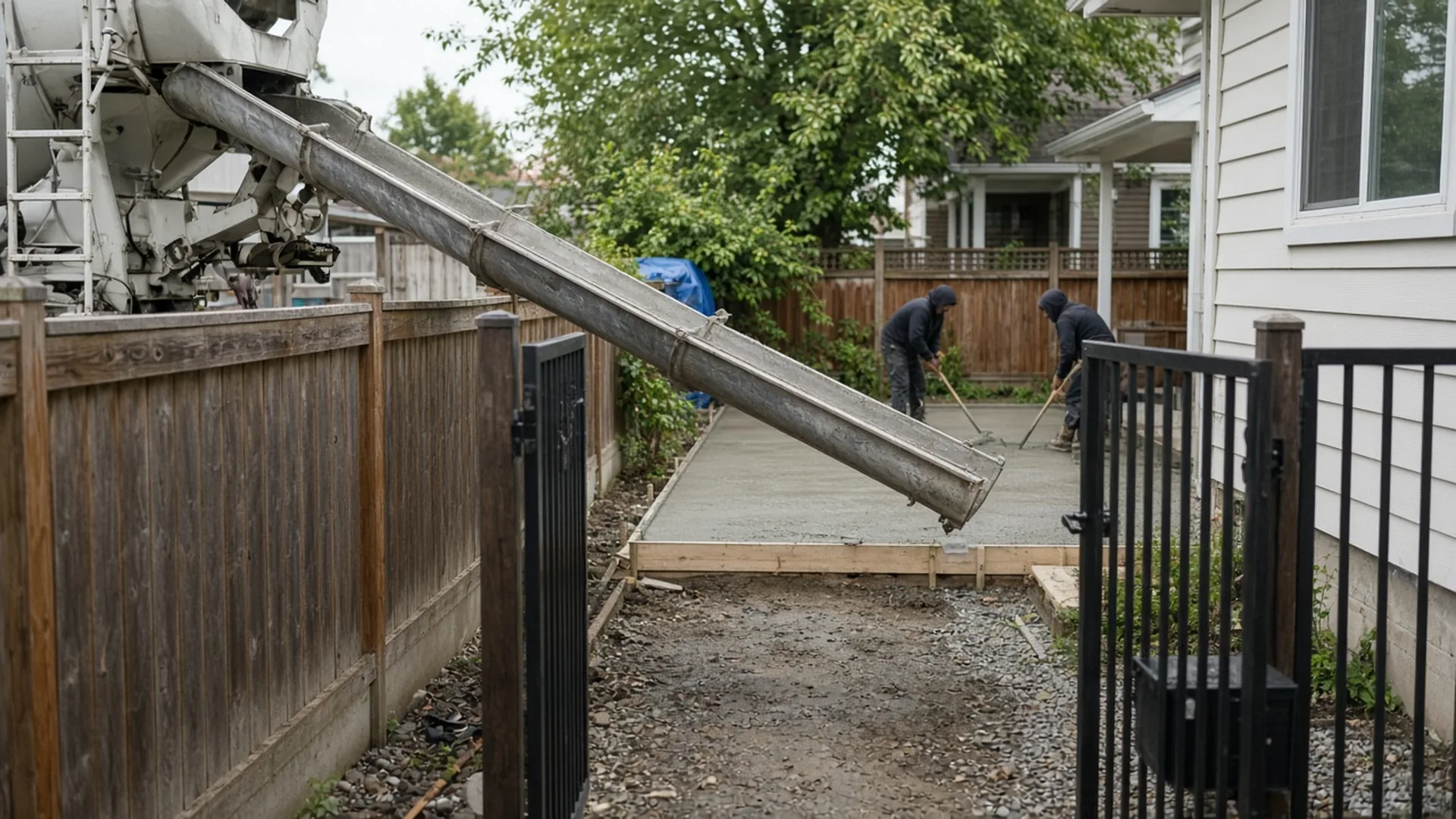
No truck access means bags or a buggy, full stop. Hot weather shortens bag working time — mix smaller batches. Cold weather and accelerators are plant conversations for ready-mix.
Do it in Concrete Calculator
Size the pour on any calculator, then compare on bags, ready-mix, and cost.
Decision table
Under 0.5 yd³: bags almost always. 0.5–1.5 yd³: compare short-load fee vs bag labor. Over 2 yd³: ready-mix unless the truck cannot reach. No access: bags or buggy regardless of volume. Staggered post setting over days: bags.
- Count bags with the bag calculator
- Count truck loads with the ready-mix calculator
- Enter both prices on the cost calculator
Labor is part of the price
Bag sticker price ignores mixing labor, water trips, and the risk of cold joints. Truck price ignores your time forming and finishing — but it usually includes a consistent mix arriving at once. Price both with eyes open.
Field notes to keep handy
Measure to the outside of the forms. Convert every side to the same unit before you multiply. Apply waste after you sum every piece of the job, then round once for the plant.
Bag counts always round up because a partial bag is still a whole bag at the store. Compare that total with a delivered price when short-load fees show up on the quote.
Normal-weight planning density here is 150 pounds per cubic foot unless you switch it. Lightweight mixes and specialty bags can differ — read the ticket or the label when they do.
Frequently asked questions
When are bags better?
Small pours, no truck access, or staggered placement.
When is ready-mix better?
Usually past 1–2 yd³, or whenever bag labor exceeds the truck.
What is a short load?
A small truck order that often carries a surcharge.
How many bags is 2 yards?
About 90×80 lb before waste.