8 minute read
Concrete Slab Thickness Calculator
Concrete Slab Thickness Calculator — clear numbers you can take to the plant or the bag aisle.
Quick answer
Concrete Slab Thickness Calculator: walks and many patios often use 4 inches on compacted gravel. Garage floors and driveways often use 5–6 inches. Soft soil, heavy vehicles, and structural slabs need a designed thickness — not a blog default.
Concrete Slab Thickness Calculator: Yardage impact
Going from 4 to 6 inches adds 50% concrete. A 20×24 pad: 5.93 yd³ at 4 in vs 8.89 at 6 in before waste. Thickness is the expensive dial once the footprint is fixed.
| Use (typical) | Thickness start |
|---|---|
| Sidewalk / patio | 4 in |
| Shed pad | 4 in |
| Garage floor | 4–6 in |
| Driveway | 5–6 in |
Concrete Slab Thickness Calculator: Base, mesh, joints
Compacted gravel is part of the section. Mesh belongs in the concrete, not on the dirt. Control joints give cracks a place to go — they do not change how many yards you order, but they change how the slab ages.
Do it in Concrete Calculator
Set thickness explicitly on the slab, patio, or driveway calculator. Do not trust a patio preset under a truck tire.
Thickness is a design input
Concrete Calculator will compute any thickness you type. It will not tell you the right thickness for soft clay, a loaded garage, or a frost detail. When the building department or engineer sets 5 inches, use 5 inches — not the patio default.
Wire mesh and fiber are not thickness. They may appear on the same detail, but yards still come from depth × area.
Garage vs patio
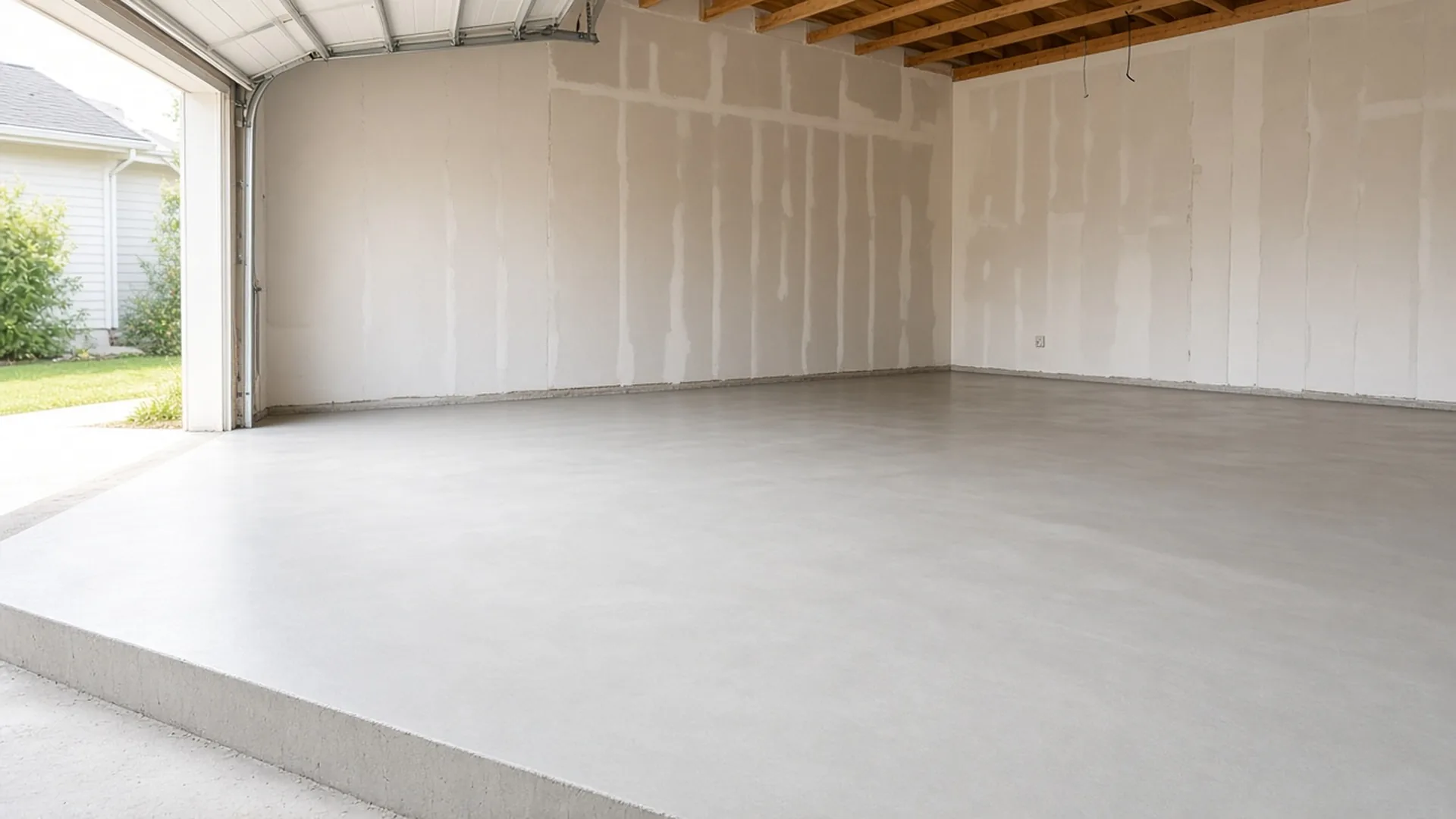
A garage slab that sees a truck tire is not a patio that sees a grill. If you reuse a 4 inch patio calculation under a vehicle, you saved yards on paper and risked the slab. Change thickness before you change anything else in the calculator.
Field notes to keep handy
Measure to the outside of the forms. Convert every side to the same unit before you multiply. Apply waste after you sum every piece of the job, then round once for the plant.
Bag counts always round up because a partial bag is still a whole bag at the store. Compare that total with a delivered price when short-load fees show up on the quote.
Normal-weight planning density here is 150 pounds per cubic foot unless you switch it. Lightweight mixes and specialty bags can differ — read the ticket or the label when they do.
Frequently asked questions
Patio thickness?
Often 4 in on compacted gravel.
Driveway thickness?
Often 5–6 in — follow the plan for soft soil or heavy loads.
Does mesh replace thickness?
No.
How much more concrete at 6 vs 4 in?
Fifty percent more for the same area.